The waters of Luzhi Ancient Town, the bridges of Tongli Ancient Town, the flavors of Lili Ancient Town, and the books of Dangkou Ancient Town — four ancient towns scattered across the Lake Taihu basin reveal Jiangsu's richest Jiangnan cultural secrets. In just four days, you can read a millennium of stories on their bluestone streets.
Luzhi Ancient Town: Water Lanes and Bridge Reflections in Daily Life
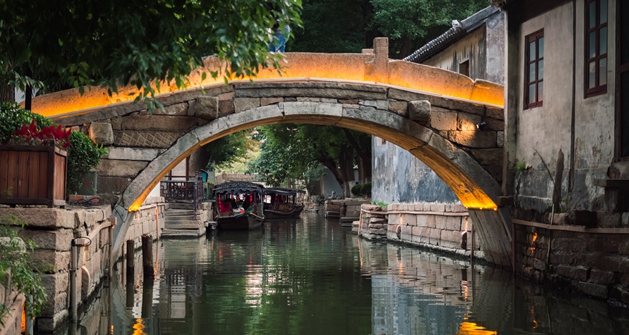
In the early morning, Luzhi is still shrouded in light mist. Just after the morning bell of Baosheng Temple, black-sailed boats on Dongshi River glide over the jade-green waves. The boatwoman rowing the boats sings traditional Wu songs, and the splashing oars sprinkle water onto the bluestone along the riverbank. You can walk up Hefeng Bridge and enjoy the view of the ancient riverside houses. Carved patterns on the wooden window lattices still bear the marks of the Ming and Qing dynasties. From inside, the subtle sound of a silk-weaving artisan threading needles can be heard — this "sage of weaving" technique has been preserved in Luzhi for hundreds of years.
Tongli Ancient Town: Leisurely Charm on Boat Along the Three Bridges
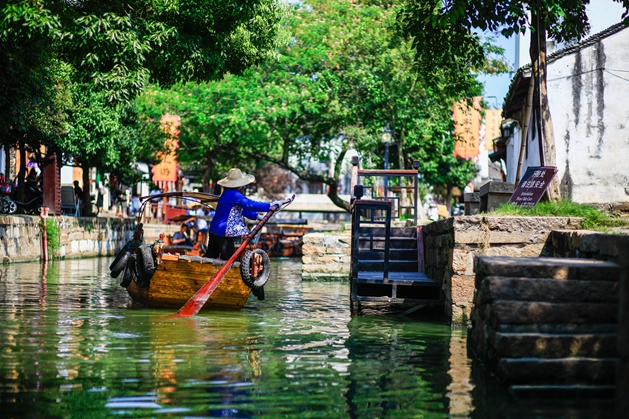
Morning mist drifts over Tongli's “川-shaped” waterways. At the Three Bridges, rowboats cut through the water while boatwomen hum fishing songs. Passing through Chuanxin Lane, you can hear the soft, melodious calls of vendors selling qianshi (gorgon fruit) cakes. You can step onto Taiping Bridge's bluestone path and glance through the windows of Tuisi Garden, where banana leaves peek in. This garden "built right next to the waters" hides subtle design ingenuity. Beyond the Yuedong Gate, paper-cutting artists craft miniature landscapes of the garden, every line echoing the spirit of Jiangnan.
Lili Ancient Town: Flavors of the Old Alleys
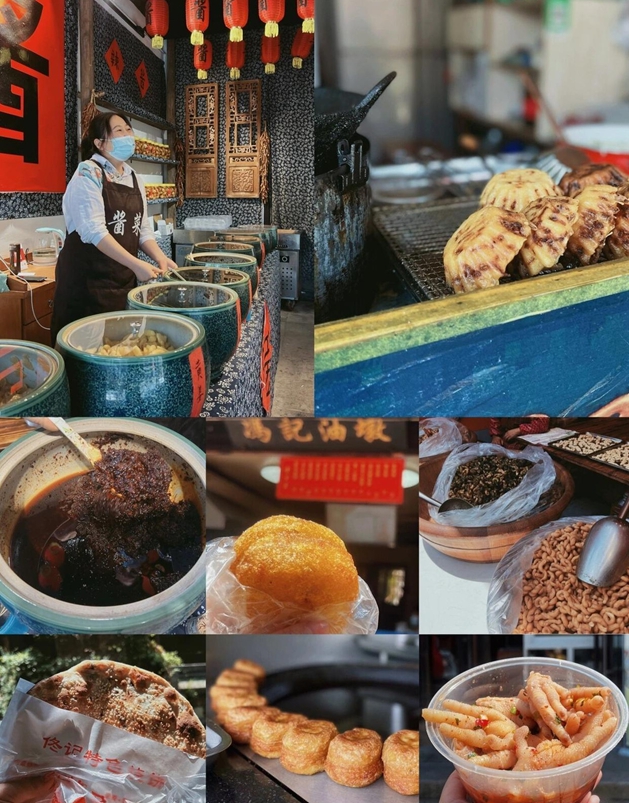
Before the morning mist clears, Zhongyuan Bridge over the Xujing River welcomes the first market-goers. The spicy-sour aroma from Wang's Spicy Chicken Feet Stall at the bridge's foot signals the awakening of taste buds — tender chicken claws marinated in a dozen seasonings, balancing sour and sweet. Visitors can walk along the three-mile-long bluestone street, where youdunzi (fried dough cakes) from Zhou Fuxing Restaurant sizzle in oil. The sweet bean paste filling mixed with sticky rice recalls a delicacy once favored by Emperor Qianlong. Then, by making a turn, you will enter Shuangfenglou Alley, where the shop owner slices prepared sausages — large intestines encasing smaller ones in lotus root-like segments — a hundred years of culinary ingenuity lies within. In the afternoon, you can sit at Xieshunxing Noodle House and order crab-roe noodles: golden crab paste coats smooth noodles, paired with freshly baked osmanthus rice cake — soft, chewy, and full of Lake Taihu autumn flavor.
Dangkou Ancient Town: Literary Elegance in Historic Homes
Dangkou awakens with the fragrance of books. The plaque of the Hua Family Ancestral Hall glows warmly in the morning light. If you push open the wooden doors, you will see a book restorer carefully organizing old volumes with bamboo tweezers, the scent of ink drifting through the courtyard. You can also visit Wang Xin’s Former Residence[1] [SZ2] , where a manuscript of "Ode to the Motherland" rests on the piano. A soft hum seems to bring the melody of its original composition to life. In the afternoon, you can pay a visit to the Huitong Pavilion to see a movable-type printing master set characters and ink them — you can even print an ancient poem by hand, with your fingertips carrying the aroma of ink. In the evening, you can sit in a small tavern in the town. Order a plate of braised gluten puff — when bitten, the rich broth spills out — paired with a cup of Wuxi yellow rice wine. The elders at the next table may recall the old days of Dangkou and tell the stories of "Money Wharf and Silver Dangkou," where refinement meets everyday life.
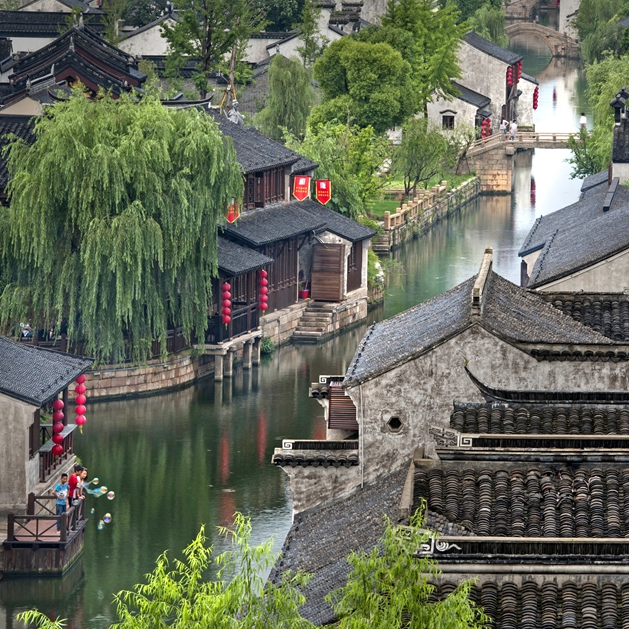
From the subtle sounds of silk-weaving in Luzhi to the savory aromas in Lili, the ancient towns of Suzhou and Wuxi are never frozen architecture. Listen to stories in the alleys, trace heritage in crafts — this journey reveals Jiangnan's most moving cultural memories.