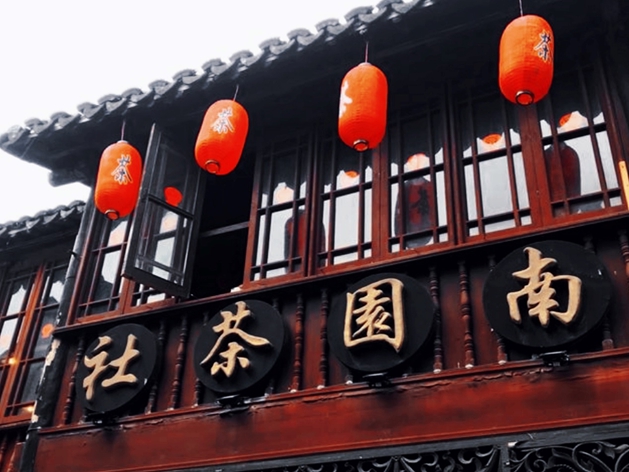
Nanyuan Teahouse, established in 1898 during the late Qing Dynasty, boasts over a century of history and is recognized as the oldest continually operating teahouse in China. This two-story wooden building, affectionately called the “No.1 Teahouse in Jiangnan,” sits at the southern tip of the historic town in Xiaolingwan. In the early morning, the soft tones of Pingtan storytelling in the Wu dialect mingle with the aroma of breakfast tea, awakening the senses; by dusk, the teahouse extinguishes its stoves, and the adjoining dining rooms fall silent.
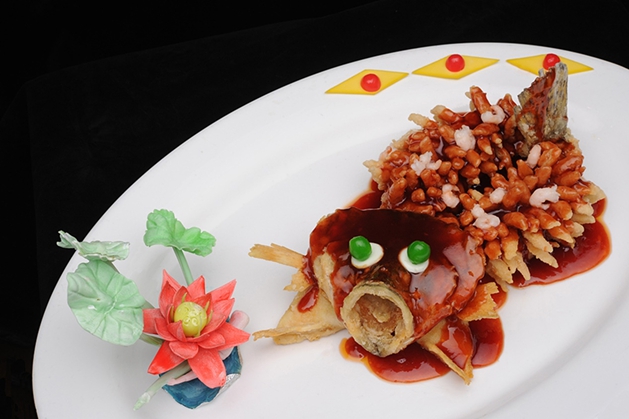
De Yue Lou, with origins tracing back to the Ming Dynasty during the Jiajing reign, has endured over four centuries to become one of Suzhou’s most iconic culinary landmarks. Its architecture reflects the classical style of Suzhou gardens, with whitewashed walls, dark-tiled roofs and elegantly upturned eaves. The existing signboard was inscribed by calligrapher Song Richang, and in 1986, the building was listed among Suzhou’s Top Ten Architectural Sites. Today, De Yue Lou continues to preserve the legacy of Su cuisine, serving traditional signature dishes such as Squirrel Mandarin Fish and Biluochun Shrimp. When Emperor Qianlong traveled south, he dined here, declaring it the “Best Restaurant Under Heaven” for its exceptional flavors.
Although the bustling crowds of the past have gradually faded, leaving only a few visitors seeking quiet charm, these establishments still maintain their unhurried rhythm. Amid the passage of time, they quietly witness and continue the enduring, gentle stories of life in the water towns.